
How to Choose the Right Semi Truck Brake Drum?

Time:2026-10-23 Author:Isabella
0%

Choosing the right Semi Truck Brake Drum is a safety decision, not merely a parts-ordering task. The drum sits behind the wheel, absorbs repeated heat, and converts air pressure into controlled stopping force. A poor match may create vibration, uneven lining wear, or dangerous heat checking. Small cracks matter.

The Commercial Vehicle Safety Alliance’s 2024 International Roadcheck reported brake-system violations as 25.2% of vehicle out-of-service violations. That figure deserves attention. FMCSA’s Large Truck and Bus Crash Facts also identifies mechanical conditions, including brake problems, among important vehicle-related safety concerns. These reports do not make drum selection simple, however. Axle rating, drum diameter, brake lining width, mounting type, and operating temperature must work together. A catalog number alone is not enough.

Fred Andersky, a recognized commercial vehicle braking specialist, has stated, “The brake system is the most important safety system on a commercial vehicle.” His point applies directly here. A fleet manager should compare OEM specifications, measure the existing drum, inspect mating surfaces, and review service records before buying. Look closely at heat marks around the friction surface. Feel for a sharp ridge at the drum opening. Check the drum’s stamped maximum diameter.

There is no perfect shortcut. Some fleets still choose by price first, then discover uneven wear. That habit needs reconsideration. Reliable selection combines verified measurements, documented testing, qualified technician experience, and a realistic understanding of the truck’s routes. Steep grades, heavy loads, frequent stops, and severe weather all change the decision.
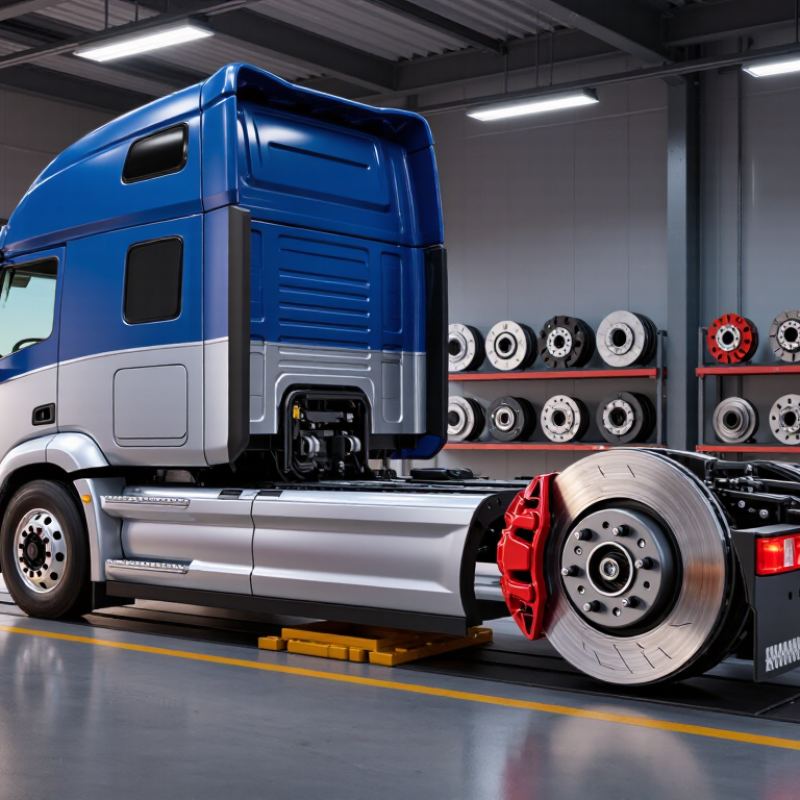
How to Choose the Right Semi Truck Brake Drum?

What a Semi Truck Brake Drum Does and Why It Matters

A semi truck brake drum converts air pressure into controlled stopping force. When the brake chamber moves, the slack adjuster turns the S-cam, pushing the shoes against the drum’s inner surface. That friction slows a loaded vehicle, but it also creates intense heat. A drum that cannot release heat may develop cracks, distortion, or reduced braking performance.

The Federal Motor Carrier Safety Administration’s Large Truck Crash Causation Study identified brake problems in about 29% of crashes involving a vehicle-related critical reason. The figure deserves attention. Brake drums are not minor hardware. Their condition can affect stopping distance, tire wear, wheel-end temperature, and driver confidence. Choose the correct diameter, width, mounting pattern, and gross axle rating. Confirm compatibility with the shoes, hub, and axle assembly. A catalog match is not enough.

During inspection, look for heat checking, deep scoring, blue discoloration, cracks, and excessive internal diameter. Measure the drum rather than trusting appearance. Surface rust is often harmless; a sharp ridge may not be. Follow the manufacturer’s discard dimension and the inspection guidance in FMCSA regulations. The Commercial Vehicle Safety Alliance also lists brake-system defects among recurring out-of-service concerns during roadside inspections.

I have found that rushed replacements create avoidable problems. New drums can still perform poorly when shoes are mismatched or adjustment is ignored. The uncomfortable question is simple: was the drum selected for the truck, or only for availability?

How to Choose the Right Semi Truck Brake Drum?

A semi truck brake drum rotates with the wheel and provides the friction surface for the brake shoes. The correct drum must match the axle’s specified diameter, lining width, mounting pattern, and maximum allowable wear limit.

The sizes shown are common nominal dimensions used in heavy-duty S-cam drum brake applications. A wider lining can provide a larger friction area, but the replacement drum must always match the original brake design and the axle manufacturer’s specifications.

Key Brake Drum Specifications to Match Your Truck

How to Choose the Right Semi Truck Brake Drum?

Key Brake Drum Specifications to Match Your Truck

Choosing a brake drum starts with exact measurements, not appearance. Record the drum diameter, overall width, and braking surface width. Then check the bolt circle, stud-hole count, and pilot diameter. These dimensions must match the wheel end precisely. A small mismatch can create runout, uneven lining contact, or difficult installation. Measure twice. I have seen clean-looking drums rejected because one pilot measurement was ignored.

Load rating and material also matter. Confirm the drum supports the axle load and the truck’s duty cycle. For heavy regional routes, heat capacity deserves close attention. Inspect the drum’s maximum service temperature and cooling design. Cast iron composition affects strength, wear, and resistance to thermal cracking. Do not judge quality by weight alone. That shortcut misled me once. An unusually light drum may fit, yet perform poorly under repeated downhill braking.

Compatibility with the complete brake assembly is equally important. Match the S-cam position, lining clearance, and internal depth. Check whether the drum is standard, oversize, or intended for a specific relined condition. Measure existing parts after removing rust and dust. Use service records, axle data, and technical drawings from a reliable supplier. If measurements conflict, stop and verify them. Guessing here is expensive. After installation, inspect contact patterns and confirm smooth rotation before returning the truck to work.

How to Compare Materials, Design, and Heat Resistance

Choosing the right semi truck brake drum starts with material comparison. Gray cast iron is common because it offers stable friction and predictable wear. Ductile iron can provide greater strength under heavy loads, but it may cost more. Material quality matters more than a simple alloy label. Ask for hardness data, casting standards, and inspection records.

Design affects braking consistency. A thicker drum can store more heat, yet extra weight may increase fuel use and suspension stress. Internal cooling ribs can improve airflow, while poor rib placement may create uneven cooling. Check the braking surface for smooth machining, correct diameter, and uniform wall thickness. Small machining errors can cause pedal pulsation.

Heat resistance deserves close attention on long descents and repeated stops. A suitable drum should resist cracking, distortion, and friction loss after repeated heating cycles. Look for evidence from dynamometer testing or controlled fleet trials. Inspect drums after demanding routes, not only when they are new. Surface discoloration can reveal overheating, but color alone is not proof. Measure wear with proper tools.

The best choice balances strength, cooling, weight, and service life. It is not always the most expensive option. A useful comparison can fail if axle load, trailer weight, or driving terrain is ignored. Keep those details in the decision.

How to Choose the Right Semi Truck Brake Drum? - How to Compare Materials, Design, and Heat Resistance
Comparison Dimension Option / Specification Typical Data or Rating Advantages Limitations and Selection Notes Best-Suited Operating Conditions
Drum Material Gray cast iron Thermal conductivity: approximately 45–60 W/m·K
Typical tensile strength: approximately 200–350 MPa
Good wear resistance, strong vibration damping, stable friction surface, and widely used for heavy-duty brake drums. More brittle than ductile iron; excessive heat or impact can cause cracking. Correct grade, casting quality, and inspection are important. General highway, regional, and mixed-service semi-truck applications when the drum matches the axle and brake assembly.
Drum Material Compacted graphite iron Thermal conductivity: commonly around 35–50 W/m·K
Higher strength and fatigue resistance than conventional gray iron
Improved resistance to thermal fatigue, cracking, and deformation while retaining useful cast-iron damping characteristics. Usually costs more and requires controlled manufacturing. Availability and compatibility with the original brake specification must be confirmed. High-mileage fleets, heavy loads, mountainous routes, and applications with frequent braking.
Drum Material Ductile iron Typical tensile strength: approximately 400–700 MPa, depending on grade and heat treatment Higher toughness and impact resistance than gray iron; useful where mechanical strength and durability are priorities. Thermal conductivity can be lower than gray iron, so design, wall thickness, and cooling capacity become especially important. Severe-duty service where impact resistance and resistance to mechanical distortion are required.
Internal Design Plain or non-finned drum Cooling performance: baseline rating of 3/5 Simple construction, lower mass, easier packaging, and generally lower purchase cost. Stores and releases heat more slowly than a well-designed finned drum; less suitable for repeated downhill braking or very high axle loads. Mostly flat routes, moderate duty cycles, and applications with adequate brake-cooling intervals.
Internal Design Finned or ventilated drum Cooling performance: approximately 4–5/5, depending on fin area and airflow Larger external surface area can improve heat dissipation and reduce temperature buildup during repeated braking. May add weight, cost, and installation-clearance requirements. Fins must not be damaged or blocked by mud and debris. Mountain routes, frequent stops, heavy cargo, and high ambient-temperature operation.
Design Accuracy Correct drum diameter and swept width Must match the axle, brake shoe, and manufacturer’s approved dimensions; common heavy-truck drum diameters are approximately 15–16.5 inches. Maintains the intended friction area, shoe contact, braking torque, and clearance. A drum that is too large, too small, or incorrectly machined can reduce braking performance and cause rapid or uneven shoe wear. Every replacement application; dimensional compatibility should be verified before installation.
Design Accuracy Balanced and concentric machining Runout should remain within the axle or brake-system service specification; excessive runout may produce pedal pulsation or vibration. Promotes even shoe contact, stable braking, reduced vibration, and longer component life. Improper machining, distortion, rust buildup, or an incorrectly seated drum can create runout even when the drum is otherwise suitable. High-speed highway operation and vehicles sensitive to brake vibration.
Heat Resistance Normal operating temperature control Repeated heavy braking can push drum temperatures above 300°C; exact limits depend on design, load, speed, and cooling. Lower operating temperature helps protect friction material, wheel-end seals, bearings, and drum geometry. Temperature alone is not a complete selection criterion; brake adjustment, lining condition, vehicle loading, and driver technique also affect heat. All applications, especially loaded vehicles on descents and routes with frequent braking.
Heat Resistance Thermal-fatigue resistance Recommended rating: 4/5 or higher for severe-duty service Helps reduce heat checking, radial cracking, distortion, and friction-surface deterioration during repeated heating and cooling cycles. High thermal resistance cannot compensate for overloaded axles, dragging brakes, incorrect adjustment, or insufficient cooling. Heavy loads, long downhill grades, stop-and-go traffic, and high-frequency braking cycles.
Weight and Inertia Lightweight drum design Lower mass reduces unsprung weight; exact weight depends on diameter, width, wall thickness, and material grade. Can improve suspension response, handling, and fuel efficiency when structural and thermal requirements are still met. Reducing mass too far can reduce heat capacity and durability. Weight should never be prioritized over approved load and thermal ratings. Long-haul fleets where weight efficiency is important and braking duty is predictable.
Inspection and Service Life Wear limit, cracks, and heat checking Measure inside diameter and compare it with the legally and technically approved maximum diameter for the specific drum. Regular measurement helps prevent excessive wall thinning, loss of braking torque, and unsafe thermal stress. Do not reuse a drum with deep cracks, severe heat checking, excessive scoring, blue discoloration from overheating, or diameter beyond specification. Every scheduled brake inspection and whenever brake shoes are replaced.
Overall Selection Recommended decision priority 1. Compatibility
2. Load and duty cycle
3. Heat management
4. Material and durability
5. Weight and cost
Balances safety, service life, braking consistency, and total operating cost. The lowest purchase price is not necessarily the lowest-cost option if it causes premature wear, downtime, or repeated replacement. Use this priority order when comparing drums for any semi-truck or trailer axle.
Selection note: The values shown are typical engineering ranges for comparison only. Always confirm the approved drum diameter, swept width, maximum allowable wear diameter, axle rating, brake-shoe compatibility, and service limits for the specific vehicle and brake system.

A Step-by-Step Method for Choosing the Correct Brake Drum

How to Choose the Right Semi Truck Brake Drum?

Choosing a semi truck brake drum starts with the vehicle application. Record the axle position, brake type, shoe width, drum depth, and mounting pattern. Measure twice. Do not guess. Compare the removed drum with reliable technical data, not appearance alone. Confirm the pilot diameter, bolt-circle dimensions, stud holes, and offset. A small mismatch can create vibration, uneven braking, or wheel-end damage.

Inspect the old drum before ordering. Measure its internal diameter with a brake drum gauge. Never exceed the manufacturer’s discard diameter. Look for cracks, deep grooves, blue heat marks, and an uneven braking surface. Check the drum weight and material specification when available. Heavy-duty service creates intense heat, especially on long descents. The replacement must suit the axle load and operating conditions. Fit matters.

During installation, clean the hub face and inspect the shoes, hardware, bearings, and seals. A new drum cannot correct worn or contaminated components. Follow the specified wheel fastener torque and brake adjustment procedure. Check that the drum rotates freely without abnormal contact. Then perform a controlled brake test at low speed. A quick visual match may feel efficient, but it is a mistake I would not repeat. Recheck the drum after initial service, because early wear can reveal a measurement or adjustment problem.

How to Verify Fit, Safety Standards, and Service Life

How to Choose the Right Semi Truck Brake Drum?

How to Verify Fit, Safety Standards, and Service Life

Fit begins with accurate measurements, not appearance. Check the drum’s inside diameter, width, bolt pattern, pilot diameter, and mounting depth. Match these details with the axle and brake assembly records. Confirm the vehicle’s gross axle load and operating conditions. A drum used on steep routes may face more heat than one used on flat highways. Always compare the replacement part with reliable technical documentation. I have seen similar-looking drums fail because their mounting depth differed by only a few millimeters.

Tips: Clean the hub before measuring. Use calibrated tools. Check for distorted studs, worn linings, and trapped debris. Do not rely on memory or a quick visual check. Small errors matter.

Safety verification requires more than a compliance label. Review the applicable regional standards, test information, material details, and traceability records. Ask whether the drum was inspected for cracks, hardness variation, and dimensional accuracy. During installation, follow the specified torque sequence and inspect the mating surfaces. A loose or uneven fit can create vibration and uneven braking. That risk is easy to underestimate.

Service life depends on heat, load, maintenance, road conditions, and lining compatibility. Measure wear during scheduled inspections, especially after long downhill work. Look for deep grooves, blue heat marks, cracks, and excessive runout. Replace the drum when measurements reach the stated limit. A checklist helps, but it is not infallible. Record inspection dates and measurements. Good records reveal patterns before they become expensive problems.

FAQS

Which measurements should I take before choosing a truck brake drum?

Measure the inside diameter, overall width, braking surface width, and mounting depth. Check the bolt circle, stud-hole count, and pilot diameter. Measure twice.

Why can a small measurement error cause problems?

A small mismatch can create runout, uneven lining contact, or difficult installation. The drum may look correct but still fit poorly. Appearance is not enough.

How should I match a brake drum with the axle?

Confirm the axle model, gross axle load, brake assembly, and service records. Match the drum with the S-cam position, lining clearance, and internal depth. Do not guess.

Does drum weight prove its quality?

No. Weight alone does not show strength, heat resistance, or service life. An unusually light drum may perform poorly during repeated downhill braking. I learned that the hard way.

What operating conditions affect brake drum selection?

Heavy loads, steep roads, frequent stops, and high temperatures increase drum stress. Regional routes may need greater heat capacity than flat highway routes. Heat matters.

How can I verify a drum’s safety and traceability?

Review applicable regional standards, material information, test data, and traceability records. Ask whether the drum was checked for cracks, hardness variation, and dimensional accuracy. A compliance label alone is not enough.

What should I check during installation?

Clean the hub and mating surfaces before fitting the drum. Use calibrated tools and follow the specified torque sequence. Inspect studs, linings, and trapped debris. Then confirm smooth rotation.

When should a brake drum be replaced?

Replace it when wear reaches the stated service limit. Also inspect deep grooves, blue heat marks, cracks, and excessive runout. Record measurements after long downhill work. Check again, even if it looks fine.

Conclusion

Choosing the right Semi Truck Brake Drum is essential for reliable braking, safe vehicle operation, and controlled maintenance costs. The brake drum works with the brake shoes to create friction and convert motion into stopping force, while also helping manage heat during repeated braking. Selecting an unsuitable drum can lead to uneven wear, reduced braking performance, overheating, or premature replacement.

This guide explains the key specifications that must match your truck, including dimensions, mounting details, weight limits, and compatibility with the existing braking system. It also compares material quality, construction design, ventilation, and heat resistance to help you evaluate long-term performance. A practical selection process covers checking vehicle information, measuring the original component, confirming load and operating conditions, and reviewing fitment details. Finally, the guide highlights how to verify safety requirements, inspect manufacturing quality, and estimate service life through proper installation, routine inspections, and timely replacement.

Isabella

Isabella

Isabella is a dedicated marketing professional with a sharp focus on driving brand growth and engagement through strategic content creation. With an extensive background in digital marketing, she combines her passion for storytelling with her keen understanding of industry trends to deliver......