
Choosing the right Giant Dump Truck is not simply a matter of selecting the largest payload. The decision begins with the worksite. Haul-road width, gradient, ground conditions, loading equipment, climate, and daily cycle distance all shape the correct specification. A truck carrying 400 tons may appear impressive, yet it can become inefficient on narrow roads or unstable benches. Bigger is not always better.
Steve Schoening, a Caterpillar mining-truck specialist, once stated, “There is no one-size-fits-all solution in mining.” That principle remains practical when comparing a Giant Dump Truck for open-pit operations. Buyers should examine payload consistency, body design, braking performance, tire availability, fuel consumption, and service access. A reliable truck must also communicate useful data through telematics. Small warnings, such as rising coolant temperature or uneven tire pressure, can prevent expensive downtime.
The human factor matters too. Operators need clear visibility, comfortable controls, and predictable handling. Maintenance crews need safe access to filters, pumps, and inspection points. These details are easy to overlook during a showroom demonstration. They become very real at 3 a.m. beside a loaded truck.
Experience also shows that purchase price can mislead. A cheaper machine may demand more fuel, parts, or unplanned repairs. Still, no calculation is perfect. Production estimates can change with weather, ore conditions, and operator skill. The strongest choice balances capacity, safety, lifetime cost, local support, and realistic site demands. That is how a Giant Dump Truck earns its value.
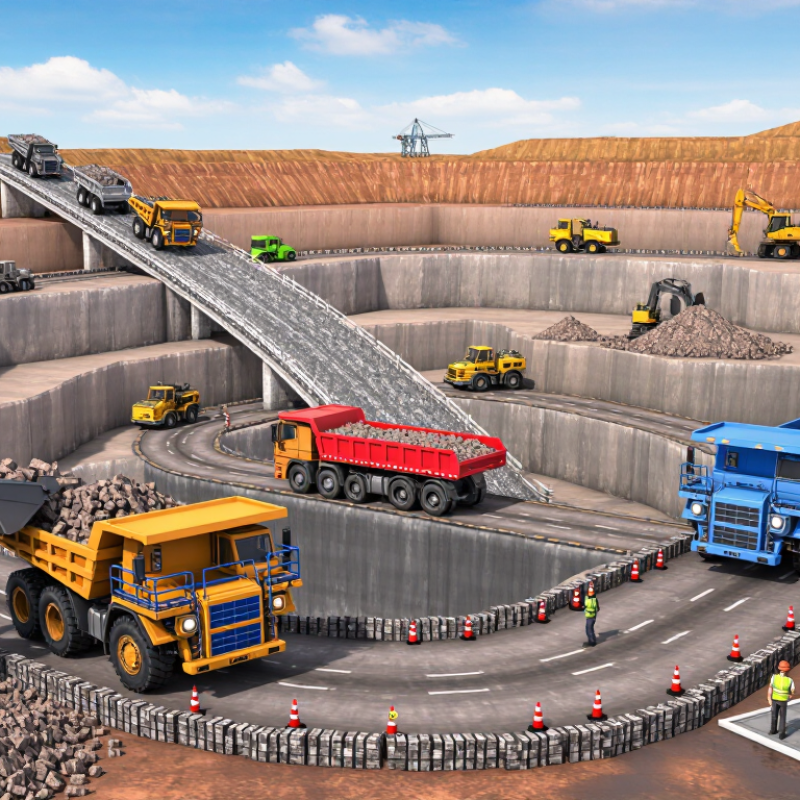
How to Choose the Right Giant Dump Truck?
Choosing the right giant dump truck starts with its working environment. Giant dump trucks generally fall into rigid-frame and articulated types. Rigid-frame trucks carry extreme payloads on wide, stable haul roads. Their large tires, stiff frames, and powerful drivetrains suit open-pit mines and major quarry sites. Articulated trucks bend at the center, helping them travel through mud, uneven ground, and tight construction routes. They usually sacrifice some payload for mobility and traction. The difference matters.
A rigid truck performs best when loading areas, haul roads, and dumping points remain predictable. It can move huge volumes efficiently, but turning space and road maintenance require careful planning. An articulated truck fits dam construction, remote earthmoving, and sites with steep grades or changing surfaces. Its central joint keeps more wheels connected to the ground. In field operations, operators often value control more than maximum capacity after heavy rain. That choice can protect schedules, although it may increase trips and fuel use.
Match the truck to payload density, cycle distance, gradient, and daily working hours. Check brake performance, retarder capacity, visibility, cabin comfort, and service access. A truck may look productive on paper but wait beside an excavator or struggle on a soft ramp. This is an easy mistake. Review actual site data, not only specification sheets. Measure queue time, tire wear, fuel consumption, and unloading conditions during a trial period. Experienced technicians and operators can reveal problems hidden by technical figures. Their feedback deserves serious weight.
Rigid-frame trucks carry very large loads on wide, stable haul roads. Articulated trucks bend at the center for better mobility. They suit mud, uneven ground, steep grades, and tight routes. The difference matters.
Choose one when loading areas and dumping points remain predictable. It performs well in open-pit mines and large quarry sites. Wide roads and generous turning space are important. Road planning cannot be an afterthought.
An articulated truck suits dam construction, remote earthmoving, and changing ground conditions. Its center joint helps keep the wheels connected to the surface. It usually carries less material per trip. Better control may matter more after heavy rain.
Measure road width, turning radius, gradient, and ground strength. A large truck may struggle on soft soil or tight switchbacks. Check excavator clearance around the loading area. Bigger is not always faster.
Dense rock can reach the rated payload before the body appears full. Loose overburden may fill the body first. Use recent, verified density measurements from site samples. Rough estimates create expensive mistakes.
Check braking control, retarder capacity, seat belts, camera coverage, and blind-spot alerts. Inspect emergency steering response and escape-route access. Visibility should remain clear around the cab. Test real visibility, not only dashboard functions.
Look for centralized lubrication, ground-level filters, and onboard fault diagnostics. Service points should be reachable without unsafe climbing. Inspect areas where mud collects, especially around frame welds. Check the frame.
Run a trial period across several shifts and weather conditions. Record queue time, tire wear, fuel use, braking behavior, and unloading conditions. Ask operators and technicians about hidden problems. Their feedback may expose weaknesses in the specifications.
Do not choose only by maximum payload or purchase price. A truck may wait beside an excavator or struggle on a soft ramp. Review actual cycle data and daily working hours. I would probably inspect the site twice. One visit may miss the problem.
Choosing the right Giant Dump Truck begins with understanding the different types available and the work each is designed to perform. Consider whether the truck will be used for mining, construction, quarrying, or large-scale earthmoving, then evaluate its payload capacity, engine power, transmission, braking system, and operating performance. The ideal model should carry the required material efficiently without excessive fuel use or reduced stability.
Site conditions are equally important. Match the truck’s size, ground clearance, turning radius, and traction to road quality, slope, weather, and hauling distance. Durability, operator safety, service accessibility, and maintenance requirements can significantly affect daily productivity. Finally, compare the total cost of ownership rather than focusing only on the purchase price. Fuel consumption, tire wear, scheduled maintenance, downtime, working life, and resale potential all influence long-term value. A well-matched Giant Dump Truck can improve hauling efficiency, reduce operating risks, and deliver dependable performance across demanding projects.
